
Prepare for Workers' Comp Mod Rate Season
Prepare for workers' comp mod rate season with effective strategies to lower costs and improve safety.
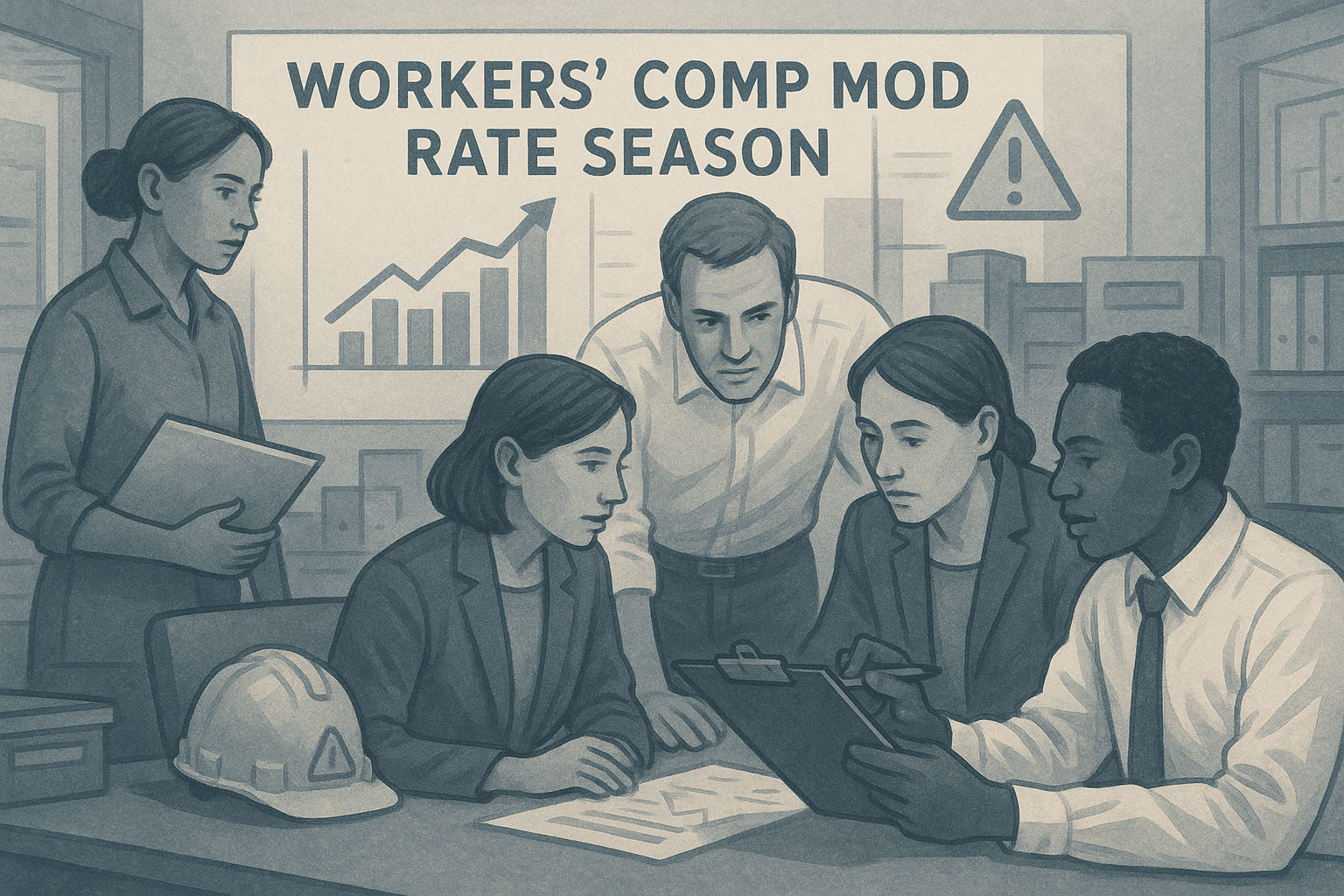
Understanding Workers' Comp Mod Rate
The Workers' Compensation Experience Modification Rate, often referred to as the Mod Rate, is crucial for California businesses dealing with workers' compensation insurance. It's a numeric representation of a business's claim history and safety record compared to industry averages. This rate significantly influences the amount your business pays for workers' compensation premiums. A high mod rate reflects more claims than the industry average, prompting higher insurance costs, while a low mod rate can lead to premium discounts.
Why It's Crucial in California
In California, workers’ compensation is not only a legal requirement but also a key component of your financial management strategy. Ensuring compliance with the California Labor Code § 3700, every business in California must have workers’ compensation insurance if they employ one or more employees. The mod rate directly impacts your insurance premiums, and preparing for the mod rate season can save significant operational costs. A higher experience modification factor generally increases workers' compensation premiums; the exact impact depends on your class codes, insurer, and payroll.
The Impact of Workers' Comp Mod Rate on Businesses
The mod rate can be seen as both a reflection of past safety practices and a predictor of future costs. Businesses with high mod rates might face challenges beyond immediate premium costs, including reduced competitiveness when bidding for contracts. For instance, a construction company with a low mod rate can more confidently bid on projects as it can offer lower overhead costs associated with labor insurance.
Industry Benchmarking
Understanding how your business performs against industry benchmarks is critical. Regularly reviewing your mod rate against industry averages can provide insights into your company's risk profile. Companies that consistently outperform industry averages can leverage this as a competitive advantage, showcasing their safety and efficiency to potential clients. High-hazard industries such as construction often carry more claim frequency and severity, which can push experience mods upward without strong safety programs.
Preparing for Workers' Comp Mod Rate Season
Preparation is everything during mod rate season. Advance planning and proactive measures can make all the difference in managing your mod rate effectively. Here are some practical steps California business owners can take:
Review and Clean Up Your Claims
Your mod rate calculation is primarily based on your historical claim data. Therefore, an essential step involves reviewing your workers’ compensation claims. Thoroughly audit past claims for accuracy and resolve any discrepancies. A well-audited claims history can reduce surprises and miscalculations that might unfavorably impact your mod rate.
- Work closely with your insurance provider to review your claims reports. Consider implementing regular quarterly reviews to ensure ongoing accuracy and timely corrections.
- Ensure all claims are closed properly to avoid artificially inflating your mod rate. Unresolved or mis-coded claims can inflate your experience mod until corrected with your insurer and the Workers' Compensation Insurance Rating Bureau (WCIRB).
Enhance Workplace Safety Programs
Investing in robust workplace safety programs is one of the most effective ways to improve your mod rate. Developing a culture of safety through comprehensive training programs reduces the likelihood and severity of workplace incidents.
- Regularly update safety protocols in compliance with California's Occupational Safety and Health standards. Documented safety programs help reduce injury rates over time, which supports a lower mod in future rating periods.
- Implement frequent safety training and drills to keep all employees aware and prepared. Training should be both theoretical and practical, enabling employees to physically engage with scenario-based drills.
Build a Safety-First Culture
Creating a safety-first culture is pivotal. It goes beyond training and drills. It involves embedding safety into the fabric of your company’s ethos and making it a key component of every business operation.
- Integrate safety goals into performance reviews and reward systems. Acknowledge and reward employees who demonstrate a strong commitment to safety.
- Host regular safety meetings to discuss incidents and near misses openly. Encouraging transparent communication can significantly reduce the frequency of reports in the long run.
Communicate and Train Your Team
Educating your employees about workplace safety can significantly reduce the number of accidents and claims. Here’s how you can leverage communication and training to your advantage:
Employee Involvement
Make safety a shared responsibility. Encourage employee feedback on safety protocols and invite them to participate in safety committees.
- Establish clear communication channels for reporting unsafe conditions. Enabling anonymous reporting can increase the likelihood of issues being flagged without fear of reprisal.
- Involve employees in safety training sessions to foster a sense of collective responsibility. Peer-to-peer training can be particularly effective as employees may feel more comfortable learning from colleagues.
Utilize Technology and Data
Technology can play a pivotal role in managing a safer workplace. Use advanced tools and software to monitor safety compliance and incident rates.
- Leverage data analytics to predict potential safety risks and take preventive action. Safety analytics can help prioritize high-risk tasks when used alongside walk-throughs and supervisor accountability.
- Implement digital reporting systems for faster incident response and documentation. Mobile apps for incident reporting can improve accuracy and response times.
Lowering Your Workers' Comp Mod Rate
Once you’ve laid the groundwork by reviewing claims and enhancing safety measures, it’s time to focus on concrete strategies to lower your mod rate.
Work with a PEO or HR Outsourcing Firm
Partnering with a Professional Employer Organization (PEO), like Easeworks, can provide expert assistance in managing your workers’ compensation. A PEO can help streamline your compliance processes, ensure accurate claim handling, and develop effective safety programs tailored to your business.
- Benefit from administrative support and expert guidance. PEOs and HR partners can centralize claims reporting and safety plan templates.
- Access to customized risk management and best practices. PEOs often offer tailored services that align with your specific industry needs.
Monitor Regularly and Adjust
Your efforts to manage your mod rate should be ongoing. Regular monitoring allows you to adjust your strategies based on real-time data and continually improve safety standards.
- Conduct regular audits of workplace safety policies. Monthly reviews can catch potential oversights before they impact your mod rate.
- Adjust training and policies as needed based on new insights and changing regulations. Staying ahead of regulatory changes ensures continuous compliance and optimal safety.
Conclusion: Take Action Today
Managing your Workers' Comp Mod Rate is integral to maintaining your bottom line and ensuring the safety and well-being of your workforce. By preparing for mod rate season with these strategies, California employers can achieve a safer working environment and potentially lower insurance costs. Contact Easeworks today to learn how our services can support your effort in managing workers’ comp and enhancing workplace safety. Together, we can help your business cultivate a resilient, informed, and safety-centered work environment.
California employers
Wondering what a PEO would actually cost?
HR, payroll, benefits, and compliance bundled — with a dedicated advisor. Most California employers pay less than managing it separately.
Was this article helpful?