
California Minimum Wage Changes for 2026
Stay prepared for the 2026 California minimum wage increase. Learn the key changes, their impact, and steps you can take to ensure compliance now.
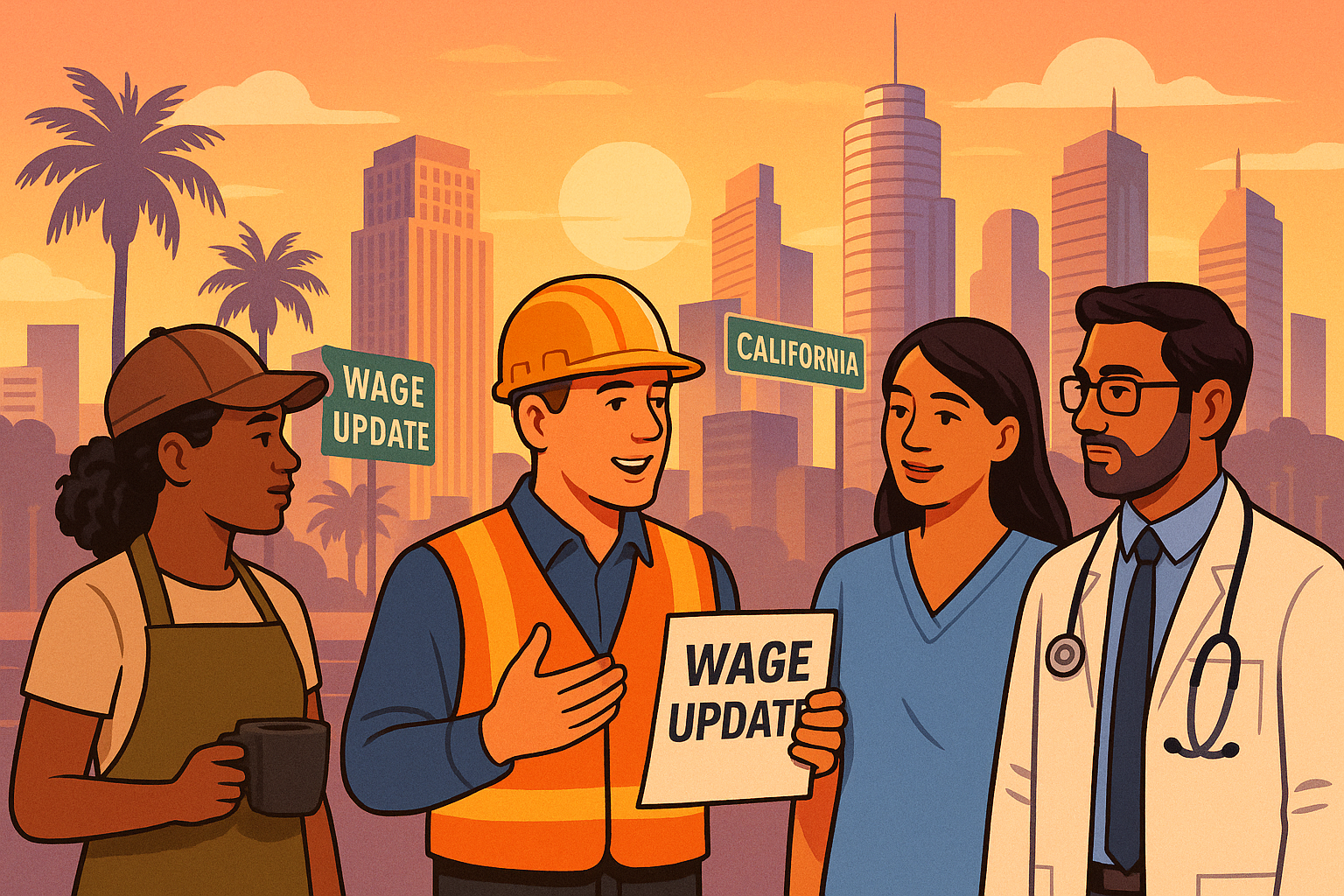
Understanding the 2026 California Minimum Wage Increase
California business owners and HR managers have consistently dealt with annual changes to wage laws, and 2026 will be no exception. Scheduled increases to the state’s minimum wage can directly impact your payroll operations, employee relations, and overall compliance strategy. Staying ahead of these changes is crucial to avoiding penalties and maintaining an engaged workforce.
This blog will outline the upcoming 2026 minimum wage hike, explain California-specific nuances for employers, and recommend actionable steps to prepare your business.
Minimum Wage in California: What’s Changing in 2026?
California’s minimum wage continues to rise in accordance with the California Labor Code § 1182.12, which mandates annual adjustments for cost-of-living increases and inflation. The state is divided into two categories for minimum wage compliance: employers with 25 or fewer employees and those with 26 or more employees. Under the current framework, California’s minimum wage hits $16 per hour in 2024 for all employers, regardless of size.
For 2026, adjustments will be based on the Consumer Price Index (CPI). As part of SB 3, annual increases beyond $15 per hour are tied to inflation, capped at 3.5%. Employers should anticipate a minimum wage of approximately $16.56 per hour starting January 1, 2026, though exact figures will be released in mid-2025.
Local Minimum Wage Ordinances
It’s important to remember that municipalities can set their own minimum wages higher than the state’s baseline. For example, major cities like San Francisco and Los Angeles often establish higher minimum wages reflecting their local costs of living.
By 2026, some of these local rates may well exceed $17 or $18 per hour. Employers should consult local city ordinances to ensure compliance and avoid costly penalties.
Exempt vs. Non-Exempt Employees in 2026
Another critical component of California's minimum wage increase is its impact on the exemption threshold under wage and hour laws. To qualify as exempt, employees must meet certain salary minimums, in addition to specific job duties outlined in California Labor Code § 515. The salary threshold for exempt employees is directly tied to the state’s minimum wage.
For exempt employees, the minimum salary level is double the state minimum wage for full-time employment. If the minimum wage reaches $16.56/hour in 2026, the exempt threshold will rise to $68,812.80 annually.
This impacts classifications like managers, supervisors, and administrative employees, where salary plays a role in their exemption from overtime and other wage protections.
Employers should review exempt classifications for compliance to prevent potential claims for misclassification.
Steps to Prepare for the 2026 Changes
With ample time to prepare, employers should adopt a proactive approach to mitigate risks and budgetary strains from the 2026 wage changes. Here are actionable steps you can take:
1. Forecast Budget Impacts
Analyze your current labor costs and forecast the financial impact of the upcoming changes. Simulate multiple scenarios based on potential wage rates, including higher local minimums. Keep in mind that increased wages may also drive up costs for payroll taxes, workers’ compensation premiums, and benefits tied to employee wages.
2. Review Employee Classifications
Perform audits of your workforce to ensure compliance with exempt and non-exempt classifications. Misclassification can result in costly lawsuits and regulatory penalties. Ensure that salaries for exempt employees meet the new minimum thresholds anticipated in 2026.
3. Update Payroll Processes
Work closely with your payroll provider to ensure systems are ready for the 2026 wage increases. Automating calculations can help eliminate human error and minimize compliance risks. For businesses managing payroll in-house, now is a good time to consider HR technology solutions that integrate payroll and compliance.
4. Evaluate Employee Compensation Plans
Take this opportunity to review your overall compensation packages. Assess whether the increases align with your company’s philosophy on pay equity and employee satisfaction. Competitive compensation is a key driver of retention in California’s tight labor market, so consider benchmarking against industry standards to stay ahead.
5. Stay Informed
Monitor updates from the California Department of Industrial Relations (DIR) and other local authorities. Regulatory changes, including confirmed rates for the 2026 minimum wage, may be announced well in advance. Subscribe to updates or partner with an HR expert to ensure you’re consistently informed.
Penalties for Non-Compliance
Failure to comply with California’s minimum wage laws can result in hefty penalties under Labor Code § 1194.2. Employers may be liable for wage underpayments, interest, and liquidated damages equal to unpaid wages. Additionally, non-compliance could expose businesses to employee lawsuits, audits, and reputational harm.
To protect your business, prioritize compliance and implement a robust payroll management system that supports accurate pay practices and record-keeping.
Conclusion: Get Expert Help with Minimum Wage Compliance
California’s 2026 minimum wage changes present both challenges and opportunities for employers. Proactively preparing for the increase ensures your business remains compliant while fostering a fair and competitive workplace.
If you need help navigating minimum wage laws or adjusting your payroll and HR processes, Easeworks has the expertise to guide you every step of the way. Our PEO and HR outsourcing services are designed to help California businesses stay compliant while optimizing their operations and supporting employee engagement.
Don’t wait until the last minute—reach out to Easeworks today to start preparing for 2026 and beyond!
California employers
Wondering what a PEO would actually cost?
HR, payroll, benefits, and compliance bundled — with a dedicated advisor. Most California employers pay less than managing it separately.
Was this article helpful?